Showing posts with label public health programs. Show all posts

Saturday, April 4, 2020

Fight Against COVID-19


As you know a new respiratory disease called COVID-19 is spreading across the world. India has also reported cases from states and the Government is trying to contain the spread of the disease. As on 27 March 2020, the Ministry of Health and Family Welfare has confirmed a total of 724 cases and 17 deaths in the country.

Support our Medical Professionals and Healthcare Staff in Government Hospitals/PHCs/CHCs : https://pages.razorpay.com/tcfproject <- 


Trinity Care Foundation is raising funds to support Health Care Workers involved in Covid19 relief efforts through the Razorpay Platform.

Kindly Donate for a

 "N95 Mask" - Rs 190 (or)

"PPE Kit" - Rs 1,680 (or)

"Sanitizer of 500 ml" - Rs 510

"Every Donation, small or big will make a difference for our Health care Workers."

http://www.trinitycarefoundation.com/covid19/

Also please share this message with friends and other groups. 🙏👍

Sunday, February 18, 2018

Healthy States, Progressive India


NITI Aayog has been mandated with transforming India by exercising thought leadership and by invoking the instruments of co-operative and competitive federalism, focussing the attention of the State Governments and Union Ministries on achieving outcomes. As the nodal agency responsible for charting India’s quest for attaining the commitments under the Sustainable Development Goals (SDGs), it was necessary to devise a mechanism for measuring outcomes particularly in the critical social sectors – such as Health and Education, where India’s record has been less than stellar. This was intended to provide feedback to all stakeholders as to whether we are on course to what we have set out to achieve, and deviations, if any, to be pointed out in time to  ensure necessary mid-course correction.

It is important to realize that implementation of social sector programs is squarely in the domain of the State Governments and India’s achievement of SDGs is therefore critically dependent on the action in the States. Nudging States towards improving their social outcomes therefore requires developing indices that would capture annual increments in performance through an independent third party process and publish these. It is true that summarizing the complexities of a given sector and condensing it in an Index has its own limitations. However, in an environment where the focus is on budget spends and outputs with limited attention on outcomes, there is a need to increase competition among States to encourage them to strive evermore for increasing the pace of change.

The Health of its population is central to a nation’s well-being and productivity. While India has made some significant gains in improving life expectancy and reducing infant and maternal mortality, our rates of improvement have been inadequate as a nation. 


Further, there are large variations in health system performance and outcomes achieved across States. The “Performance in Health Outcomes” Index seeks to capture the annual progress of States and Union Territories (UTs) on a variety of indicators – Outcomes, Governance and Processes. While we have also reported the overall levels of performance of States, the focus of the NITI Index is to propel change, highlighting those States that have shown most improvement. The exercise has been spearheaded by NITI Aayog in collaboration with the Ministry of Health and Family Welfare, with technical assistance from the World Bank, the authors of this report on the ranks and their interpretation.

The exercise, which is the first of its kind attempted by the Union Government was conducted over a period of eighteen months. In addition to the technical expertise of the World Bank, experts in public health, economics, statistics and health systems were consulted in the development of the Index. It involved extensive engagement with the States for finalization of the indicators, sensitization workshops for sharing the methodology, process of data submission and addressing concerns; mentoring of States for the data submission process on an online portal and independent data validation.

The process of Index development and implementation highlighted the large gaps in data availability on health outcomes.The need for making outcome data available for smaller states, more frequent and updated outcomes for non-communicable diseases and financial protection, and the need for robust programmatic data that can be used for continuous monitoring, were important issues that despite our efforts, could not be addressed optimally in this first round. Despite these challenges and limitations, it was decided to launch the Index in the first year as a model to measuring performance and ranking States on change. We thereby hope to spur action on several fronts in bringing about national level transformation. We will strive to address the lessons learned in this first round and refine the Index in the successive years of its implementation. The linking of the Health Index with incentives under the National Health Mission by the Ministry of Health and Family Welfare underlines the importance of such an exercise. It re-emphasizes the move towards performance based financing for better outcomes.

Trinity Care Foundation has the Trust registration, PAN, TAN, 12A, 80G, Professional tax and FCRA. It is registered with NITI Ayog, Government of India. It is National Health Mission Partner in Karnataka, India.

Contact Us :
email: support@trinitycarefoundation.org
tel: Dr. Thomas +91 9880396666 or  Mr. Binu +91 9880358888

Meet us : Map : https://goo.gl/maps/dF2rtWmazKk
Web: www.trinitycarefoundation.com
-> https://www.flickr.com/photos/trinitycarefoundation/albums


Tuesday, August 28, 2012

Outreach Health Program in Channapatna Hospital

On the 28th of July 2012, the Trinity Care Foundation conducted a free medical camp in the government hospital in Channapatna, Karnataka. This medical camp aimed at identifying patients from the region with facial deformities who required surgical procedures to rectify them.

Trinity Care Foundation worked in conjunction with government health officials in order to organize this event. Health Workers from villages in the district were directed in advance to escort patients with facial deformities to this camp. In order to spread the word about the camp, the foundation organized press releases in local newspapers and also put up advertisement posters in and around the town.  Additionally, a regional TV network was asked to cover the event itself.
Consultation
A team of 11, including doctors as well as interested observers from other organizations, set out from Bangalore early in the morning and arrived at Channapatna hospital, the site of the camp at around 10:45 am.

Once there, the team began examining patients – who consisted mostly of young children and middle aged adults – to determine the extent of their deformities and decide on a possible course of action to correct these problems. These patients, led by their Health workers attended the camp after travelling from villages as distant as 60 km from the hospital.
Health Workers
ASHA Workers
The team distributed toys – like plastic flutes, rubber pencils and even colouring books – as well as candies among the patients to help them feel comfortable during the process of examination. Nearly twenty people were examined for facial deformities, which included cleft lip and palate problems, misaligned parts and even locked jaws. The doctors explained to each patient – and in many cases, parents and other relatives of these patients as well – exactly what procedures needed to be done to cure them of their deformities. While the team had anticipated a problem in convincing patients of the need for surgery, there did not appear to be any such issue. Each person examined was given a diagnosis and a prescription sheet, and some patients were also asked to come into Bangalore for a surgery on a given date.
The camp closed at 1:30 pm, after every single patient had been observed. Trinity Care Foundation hopes to build on its successes by organizing another such camp soon. Patients who require surgery will be treated at hospitals in Bangalore. 
Trinity Care Foundation is a Non Governmental Organization focusing on Craniofacial Surgeries, School Health and Outreach Health Programs in Karnataka, India.
                   : Flickr : Facebook : Pinterest : YouTube : Wordpress : 

Tuesday, July 3, 2012

World No Tobacco Day 2012 Theme


Trinity Care Foundation organized an Anti Tobacco Program on June 15th 2012 on the World No Tobacco Day Theme 2012.  “Tobacco Industry Interference” was the theme.

The Health Team from Government of Karnataka Health Department, Trinity Care Foundation and M.R Ambedkar Dental College were present in the KSRTC Bus Stand Kanakapura Town, Ramanagara District, Karnataka, India for providing Health Services to the General Public.

Health Education 
The Program intended to create awareness among  the people about the harmful effects of tobacco consumption highlighting the ill health effects of smoking to both smokers and non-smokers. An Oral Screening with Health Education on the evils of tobacco was given  to the patients and their attendants. Patients were given education about the risk factors associated with tobacco consumption and smoking.


The Program focused  on :
1. Health Education –  ill effects of Tobacco
2. Oral Screening -  Diagnosis and Referral to   M.R Ambedkar Dental College for Further Treatment
3. Dental Treatment – Minor Treatments on the Mobile Dental Unit

World No Tobacco Day 2012 will educate policy-makers and the general public about the tobacco industry's nefarious and harmful tactics. Tobacco industry interference is the theme of this year’s World No Tobacco Day. 
Oral Screening 

The campaign will focus on the need to expose and counter the tobacco industry's brazen and increasingly aggressive attempts  to undermine global tobacco control efforts. The campaign will focus on the need to expose and counter the tobacco industry's brazen and increasingly aggressive attempts to undermine the WHO Framework Convention on Tobacco Control (WHO FCTC) because of the serious danger they pose to public health.

Tobacco use is one of the leading preventable causes of death. Each year, the global tobacco epidemic kills nearly 6 million people. It is on a track to kill more than 8 million people by 2030, by which time approximately 80% of the deaths would occur in low and middle income countries.

A tobacco ban on tobacco marketing can substantially reduce tobacco consumption and consequently tobacco related deaths and disease. We have to look into the causes of tobacco usage and think of new strategies to curb it, said  Dr. Umashankar G K, Trinity Care Foundation.
Dental Treatments

Many patients were diagnosed with oral dental pre-malignant condition and lesions like oral sub-mucous fibrosis, leukoplakia, tobacco quid lesion, smokers palate. Complete oral was done and many patients received treatments on the Mobile Dental Unit stationed at the Bus Stand. 

Counseling Sessions were also discussed with patients and their attendants.The Program was initiated by Government of Karnataka Health Department, Trinity Care Foundation and M.R Ambedkar Dental College.

Trinity Care Foundation is a Non Governmental Organization focusing on Craniofacial Surgeries, School Health and Outreach Health Programs in Karnataka, India.
                   : Flickr : Facebook : Pinterest : YouTube : Wordpress : 

Wednesday, May 30, 2012

World No Tobacco Day 2012


       World No Tobacco Day (WNTD) is commemorated on 31 May every year. The theme for this year’s (2012) WNTD is “Tobacco Industry Interference”.

tobacco
World No Tobacco Day 2012
The campaign focuses on the need to expose and counter the tobacco industry's brazen and increasingly aggressive attempts to undermine the WHO Framework Convention on Tobacco Control (WHO FCTC).

World No Tobacco Day 2012 will educate policy-makers and the general public about the tobacco industry's harmful tactics.

It will also be in keeping with the letter and the spirit of the WHO FCTC. The preamble of the treaty recognizes "the need to be alert to any efforts by the tobacco industry to undermine or subvert tobacco control efforts and the need to be informed of activities of the tobacco industry that have a negative impact on tobacco control efforts".

On World No Tobacco Day 2012, and throughout the rest of the year, WHO will urge countries to put the fight against tobacco industry interference at the heart of their efforts to control the global tobacco epidemic.

Trinity Care Foundation is a Non Governmental Organization focusing on Craniofacial Surgeries, School Health and Outreach Health Programs in Karnataka, India.
                   : Flickr : Facebook : Pinterest : YouTube : Wordpress :  

Friday, March 16, 2012

Outreach Health Programs


Community outreach programs is an important vehicle for reducing the discovery-delivery disconnect by bringing health education and Health screening services directly to community members. Such programs are consistent with the priority areas of Trinity Care Foundation initiatives for reducing health disparities.

Outreach programs are important tools for bringing health education and screening services directly to community members and serve to contribute to reducing health disparities.They assist communities and hospitals to reach mutually beneficial goals that would otherwise not be achievable for promoting accessible and equitable care .


Community Health Program focusing on the rural poor. A Team of Public health professionals consisting of Physician, Pediatrician, Gynecologist, Ophthalmologist and Dental surgeons visit the rural areas of Bangalore Rural and Kolar District and provide valuable service. Medicines are distributed at free of cost. 
Trinity Care Foundation is a Non Governmental Organization focusing on Craniofacial Deformities, School Health and Outreach Programs in Karnataka, India. We work in synergy with the Education Department of Karnataka (known as DPI) and Health Department, Karnataka to implement Outreach Programs.
Reach us at : support@trinitycarefoundation.org 

Some of the Public Health Programs of Trinity Care Foundation are:
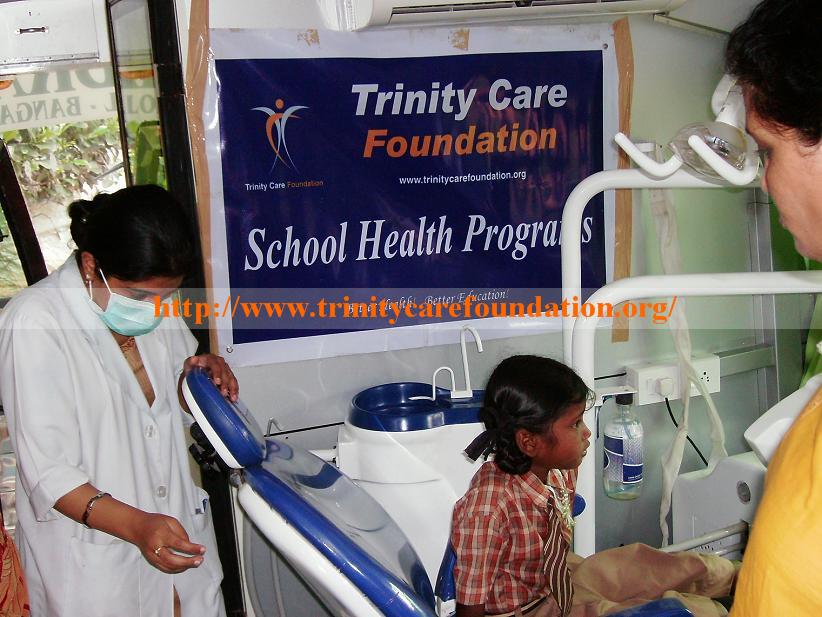
There is Medical Check-up for the Students in the Village Government School and also for the Teachers and Parents of the Students. Medicines are distributed along with Dental Treatments ( Scaling, Restorations and Extractions). Medical team consists of Physician, Pediatrician, Gynecologist and Ophthalmologist. Dental Team consists of Public Health Dentists along with a Mobile Dental Unit which has 2 high- tech dental chairs.


Thursday, November 17, 2011

Outreach Health Program at Beerasandra Village

Community HealthProgram at Beerasandra Village, Karnataka,India.


outreach health program

The Details of the Community Health Program are:

Date: Tuesday, 22nd November 2011.
Time: 10:00am to 3:00pm.

Location: Government Primary School, Beerasandra Village, Devanahalli Taluk, Karnataka, India

Info:

health services
Public Health Programs
Medical Check-up for 120 Students (1st Standard to 7th Standard), Teachers and Parents. Medicines will be distributed along with Dental Treatments ( Scaling, Filling and Extractions).

Medical team consists of Physician, Pediatrician, Gynecologist and Ophthalmologist. 
Dental Team consists of Public Health Dentists along with a Mobile Dental Unit which has 2 high tech dental chairs.


public health dentistry
Public Health Dentistry


health camp
Community Health


ngo
Trinity Care Foundation
Trinity Care Foundation is a Non Governmental Organization focusing on Craniofacial Surgeries, School Health and Outreach Health Programs in Karnataka, India.
                   : Flickr : Facebook : Pinterest : YouTube : Wordpress : 

Sunday, September 25, 2011

Tobacco and Heart Diseases ?


                          Tobacco and Heart Diseases 
  • Smoking causes coronary heart disease, the leading cause of death in the United States. Cigarette smokers are 2–4 times more likely to develop coronary heart disease than nonsmokers.
  • Cigarette smoking approximately doubles a person's risk for stroke.

tobacco
Health Education
  • Cigarette smoking causes reduced circulation by narrowing the blood vessels (arteries). People who smoke have a much greater risk of developing peripheral vascular disease than nonsmokers.
  • Smoking causes abdominal aortic aneurysm.
  • Secondhand smoke exposure causes heart disease and lung cancer in nonsmoking adults.
  • Nonsmokers who are exposed to secondhand smoke at home or work increase their heart disease risk by 25–30% and their lung cancer risk by 20–30%.
  • Breathing secondhand smoke has immediate harmful effects on the cardiovascular system that can increase the risk of heart attack. People who already have heart disease are at especially high risk.


Trinity Care Foundation is a Non Governmental Organization focusing on Craniofacial Deformities, School Health and Outreach Programs in Karnataka, India.We requires your Support to implement these Community Health Programs in Government Schools and Colleges in Ramanagara, Kolar and Bangalore Rural Districts. 
Kindly Contact us.. Email: support@trinitycarefoundation.org  


Friday, September 9, 2011

Warn about the Dangers of Tobacco


One of six cost-effective actions endorsed by who to reduce tobacco’s deadly toll .


smoking
Passive Smoking
Tobacco is a deadly, addictive product. The extreme addictiveness of tobacco and the full range of health dangers are not fully understood or appreciated by the public.

WHO framework convention on tobacco control (FCTC)
FCTC

Article 11 of the FCTC requires parties to use large, clear health warnings that should cover 50 percent of the principle display areas. The article also requires parties to implement effective measures to ensure that tobacco product packaging and labeling do not promote a tobacco product by any means that are false, misleading, deceptive, or likely to create an erroneous impression about its characteristic, health effects, hazards, or emissions.These include terms such as “light,” “low tar,” and “ultra-light.”

Tobacco Free Kids


Key Messages

• Tobacco is deadly and addictive.
• To ensure that the public is fully informed of tobacco’s harms and to counter the seductive images of tobacco portrayed by the tobacco industry, it is essential to:  
» Place health warnings on all tobacco product packaging. Tobacco pack warnings should be clear, include graphic pictures of tobacco’s harms and cover at least half of all outer product covering.  
» Launch tobacco control media campaigns and other counter advertising activities. Media campaigns must be hard hitting, sustained over significant amounts of time and effectively counter the tobacco  industry’s marketing and promotional tactics.  
• Terms such as “light” and “low” are misleading and deceptive. Such products do not reduce risk.

tobacco
Smoking
The case for warning about the dangers of tobacco   

• In Brazil, after the introduction of new picture warnings, 73% of smokers approved of them, 54% had changed their opinion on  the health consequences of smoking and 67 % said the new warnings 
made them want to quit.
• Pack-a-day smokers are potentially exposed to the warnings over 7,000 times per year.
• Pictorial warnings are overwhelmingly supported by the public.  
• Hard hitting, intensive media campaigns using graphic images inform the public, reduce tobacco use, and increase quit attempts and cessation rates.

Sources:

  1. http://tobaccofreecenter.org/files/pdfs/en/MPOWER2009_warning_en.pdf
  2. http://www.facebook.com/notes/trinity-care-foundation/bidis-an-overview/206543949409063 
  3. http://www.facebook.com/trinitycarefoundation 
Trinity Care Foundation is a Non Governmental Organization focusing on Craniofacial Surgeries, School Health and Outreach Health Programs in Karnataka, India.
                   : Flickr : Facebook : Pinterest : YouTube : Wordpress : 


Sunday, September 4, 2011

Bidis - Tobacco

The Indian market of smoking tobacco is dominated by bidis (also known as beedis and biris) which actually consists of  shredded tobacco, hand rolled in a tendu leaf secured with a colorful string at one end. Bidi are usually smoked by men, but produced mainly by women and young children who roll them in their homes. Bidis outsell cigarettes by a ratio of eight to one (8:1) in India. 


tobacco

Bidi smoking kills :


  • Bidi smoking has been shown to increase the risk of chronic bronchitis, tuberculosis, and respiratory diseases.
  • A study in Bangalore found that smokers of 10 or more bidis per day were over 4 times more likely to have a heart attack than nonsmokers.
  • Studies in India show that bidi smokers have 5 – 6 times greater risk of lung cancer than nonsmokers  as well as high risks of oral cancer. 
  • A study in Tamil Nadu demonstrates that about half (47%) of deaths of rural men from tuberculosis (TB) are caused by bidi smoking.
  • A study in Mumbai reported death rates to be 64% higher among bidi smokers compared to non-tobacco users. Even among smokers of less than 5 bidis a day, the death rates were 42% higher.
  • Bidi smoke delivers more tar, carbon monoxide and nicotine than western-style cigarettes, and therefore Bidis are more or equally harmful as cigarettes. 


Bidi rolling forces the poor to remain in perennial poverty: 

  • The minimum wage fixed by state governments for rolling 1000 bidis varies from Rs. 29.0 in Tripura to Rs. 64.8 in Gujarat. 
  • After continuous exposure to tobacco, the skin on the fingertips begins to thin and they become inefficient in rolling bidis at about the age of 45. Many are forced to resort to begging when they can no longer work. 
Tobacco cultivation and bidi-rolling cause serious occupational hazards to the workers and their families:
  • Studies show that those working in tobacco harvesting have evidence of nicotine in their urine. Exposure to nicotine facilitates addiction.
  • Bidi rollers experience exacerbation of tuberculosis, asthma, anaemia, giddiness, postural and eye problems, and gynecological difficulties. 
  • When bidis are stored in the house, food spoils quicker and family members experience nausea and headaches. 
Women and children share the greatest burden of bidi production:
  • Nearly 225,000 children are engaged in bidi making. 
  • Women constitute 76 – 95% of total employment in bidi manufacturing. 
  • Female bidi rollers report verbal and physical abuse based on gender and caste differences.


Source:     

  1. http://tobaccofreecenter.org/ 
  2. http://www.facebook.com/trinitycarefoundation
  3. http://www.trinitycarefoundation.org/            

Trinity Care Foundation is a Non Governmental Organization focusing on Craniofacial Surgeries, School Health and Outreach Health Programs in Karnataka, India.
                   : Flickr : Facebook : Pinterest : YouTube : Wordpress : 

Saturday, August 27, 2011

Toll of Tobacco in India ...

children
Youth Smoking 

                                                  Consumption

youth smoking
Tobacco related Diseases 
  • There are almost 275 million tobacco users in India.        
  • Over one-third of adults (age 15+) use some form of tobacco (35 percent), including almost half of men (48 percent) and 20 percent of women. 
  • Among youth (age 13-15), 4 percent smoke cigarettes and almost 12 percent use other types of tobacco products.
  • Bidis comprise 48 percent of the tobacco market, chewing tobacco 38 percent and cigarettes 14 percent. 
  •  Bidis comprise 48 percent of the tobacco market, chewing tobacco 38 percent and cigarettes 14 percent. 


                              Health Consequences       


tobacco related diseases
Tobacco Related Diseases 

  • About 1 million Indians die from tobacco-related diseases each year in India.
  • Among youth (age 13-15), 27 percent are exposed to secondhand smoke at home and 40 percent are exposed to secondhand smoke in public places.         

Source :  


Trinity Care Foundation is a Non Governmental Organization focusing on Craniofacial Surgeries, School Health and Outreach Health Programs in Karnataka, India.
                   : Flickr : Facebook : Pinterest : YouTube : Wordpress :