Showing posts with label community health. Show all posts

Thursday, December 20, 2012

HAL Corporate Social Responsibility (CSR)

                              Outreach Health Programs in Karnataka. 

As part of Corporate Social Responsibility (CSR), HAL Bangalore is associated with Trinity Care Foundation focusing on Outreach Health Programs in Bagepalli Taluk, Chickaballapura District, Karnataka. 

The Health Programs are focusing on Orthopedics, Gynaecology, Dermatology, Diabetology, Cardiology, Pediatrics, Ophthalmology and Dentistry. Bagepalli Taluk has high incidence of Fluoride in ground water.


Inauguration 

Children Screening

Health Screening

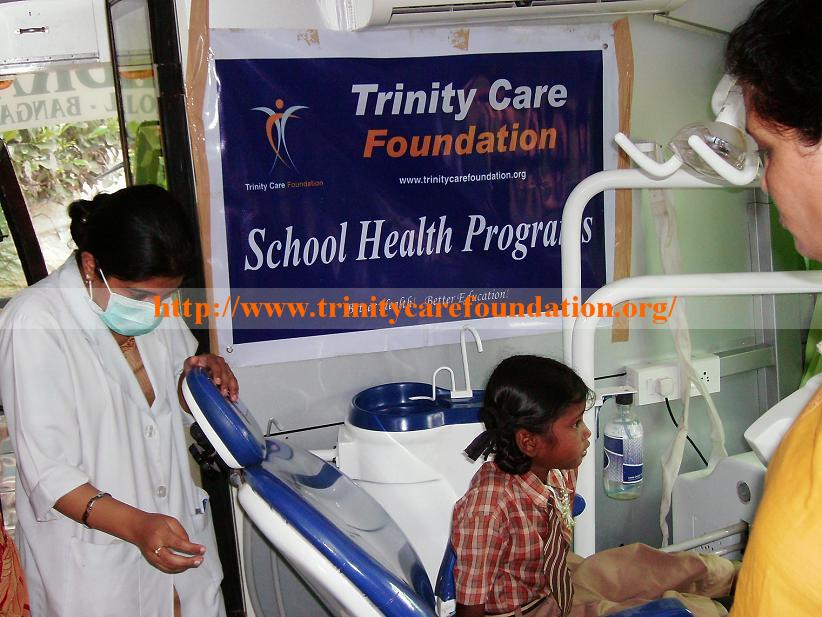
Dental Treatment 

Public Health Professionals

Trinity Care Foundation is a Non Governmental Organization focusing on Craniofacial SurgeriesSchool Health and Outreach Health Programs in Karnataka, India.
                             : Flickr Facebook : Pinterest : YouTube : Wordpress :  

Sunday, November 25, 2012

Cleft Lip and Palate

Cleft lip and cleft palate are birth defects that affect the upper lip and roof of the mouth. They happen when the tissue that forms the roof of the mouth and upper lip don't join before birth. The problem can range from a small notch in the lip to a groove that runs into the roof of the mouth and nose. This can affect the way the child's face looks. It can also lead to problems with eating, talking and ear infections.

Cleft_lip_and_palate

Treatment usually is surgery to close the lip and palate. Doctors often do this surgery in several stages. Usually the first surgery is during the baby's first year. With treatment, most children with cleft lip or palate do well.

Trinity Care Foundation is a Non Governmental Organization focusing on Craniofacial SurgeriesSchool Health and Outreach Health Programs in Karnataka, India.
                   : Flickr Facebook : Pinterest : YouTube : Wordpress :  

Tuesday, August 28, 2012

Outreach Health Program in Channapatna Hospital

On the 28th of July 2012, the Trinity Care Foundation conducted a free medical camp in the government hospital in Channapatna, Karnataka. This medical camp aimed at identifying patients from the region with facial deformities who required surgical procedures to rectify them.

Trinity Care Foundation worked in conjunction with government health officials in order to organize this event. Health Workers from villages in the district were directed in advance to escort patients with facial deformities to this camp. In order to spread the word about the camp, the foundation organized press releases in local newspapers and also put up advertisement posters in and around the town.  Additionally, a regional TV network was asked to cover the event itself.
Consultation
A team of 11, including doctors as well as interested observers from other organizations, set out from Bangalore early in the morning and arrived at Channapatna hospital, the site of the camp at around 10:45 am.

Once there, the team began examining patients – who consisted mostly of young children and middle aged adults – to determine the extent of their deformities and decide on a possible course of action to correct these problems. These patients, led by their Health workers attended the camp after travelling from villages as distant as 60 km from the hospital.
Health Workers
ASHA Workers
The team distributed toys – like plastic flutes, rubber pencils and even colouring books – as well as candies among the patients to help them feel comfortable during the process of examination. Nearly twenty people were examined for facial deformities, which included cleft lip and palate problems, misaligned parts and even locked jaws. The doctors explained to each patient – and in many cases, parents and other relatives of these patients as well – exactly what procedures needed to be done to cure them of their deformities. While the team had anticipated a problem in convincing patients of the need for surgery, there did not appear to be any such issue. Each person examined was given a diagnosis and a prescription sheet, and some patients were also asked to come into Bangalore for a surgery on a given date.
The camp closed at 1:30 pm, after every single patient had been observed. Trinity Care Foundation hopes to build on its successes by organizing another such camp soon. Patients who require surgery will be treated at hospitals in Bangalore. 
Trinity Care Foundation is a Non Governmental Organization focusing on Craniofacial SurgeriesSchool Health and Outreach Health Programs in Karnataka, India.
                   : Flickr Facebook : Pinterest : YouTube : Wordpress : 

Friday, March 16, 2012

Outreach Health Programs


Community outreach programs is an important vehicle for reducing the discovery-delivery disconnect by bringing health education and Health screening services directly to community members. Such programs are consistent with the priority areas of Trinity Care Foundation initiatives for reducing health disparities.

Outreach programs are important tools for bringing health education and screening services directly to community members and serve to contribute to reducing health disparities.They assist communities and hospitals to reach mutually beneficial goals that would otherwise not be achievable for promoting accessible and equitable care .


Community Health Program focusing on the rural poor. A Team of Public health professionals consisting of Physician, Pediatrician, Gynecologist, Ophthalmologist and Dental surgeons visit the rural areas of Bangalore Rural and Kolar District and provide valuable service. Medicines are distributed at free of cost. 
Trinity Care Foundation is a Non Governmental Organization focusing on Craniofacial Deformities, School Health and Outreach Programs in Karnataka, India. We work in synergy with the Education Department of Karnataka (known as DPI) and Health Department, Karnataka to implement Outreach Programs.
Reach us at : support@trinitycarefoundation.org 

Some of the Public Health Programs of Trinity Care Foundation are:
There is Medical Check-up for the Students in the Village Government School and also for the Teachers and Parents of the Students. Medicines are distributed along with Dental Treatments ( Scaling, Restorations and Extractions). Medical team consists of Physician, Pediatrician, Gynecologist and Ophthalmologist. Dental Team consists of Public Health Dentists along with a Mobile Dental Unit which has 2 high- tech dental chairs.


Thursday, November 17, 2011

Outreach Health Program at Beerasandra Village

Community HealthProgram at Beerasandra Village, Karnataka,India.


outreach health program

The Details of the Community Health Program are:

Date: Tuesday, 22nd November 2011.
Time: 10:00am to 3:00pm.

Location: Government Primary School, Beerasandra Village, Devanahalli Taluk, Karnataka, India

Info:

health services
Public Health Programs
Medical Check-up for 120 Students (1st Standard to 7th Standard), Teachers and Parents. Medicines will be distributed along with Dental Treatments ( Scaling, Filling and Extractions).

Medical team consists of Physician, Pediatrician, Gynecologist and Ophthalmologist. 
Dental Team consists of Public Health Dentists along with a Mobile Dental Unit which has 2 high tech dental chairs.


public health dentistry
Public Health Dentistry


health camp
Community Health


ngo
Trinity Care Foundation
Trinity Care Foundation is a Non Governmental Organization focusing on Craniofacial SurgeriesSchool Health and Outreach Health Programs in Karnataka, India.
                   : Flickr Facebook : Pinterest : YouTube : Wordpress : 

Friday, September 9, 2011

Warn about the Dangers of Tobacco


One of six cost-effective actions endorsed by who to reduce tobacco’s deadly toll .


smoking
Passive Smoking
Tobacco is a deadly, addictive product. The extreme addictiveness of tobacco and the full range of health dangers are not fully understood or appreciated by the public.

WHO framework convention on tobacco control (FCTC)
FCTC

Article 11 of the FCTC requires parties to use large, clear health warnings that should cover 50 percent of the principle display areas. The article also requires parties to implement effective measures to ensure that tobacco product packaging and labeling do not promote a tobacco product by any means that are false, misleading, deceptive, or likely to create an erroneous impression about its characteristic, health effects, hazards, or emissions.These include terms such as “light,” “low tar,” and “ultra-light.”

Tobacco Free Kids


Key Messages

• Tobacco is deadly and addictive.
• To ensure that the public is fully informed of tobacco’s harms and to counter the seductive images of tobacco portrayed by the tobacco industry, it is essential to:  
» Place health warnings on all tobacco product packaging. Tobacco pack warnings should be clear, include graphic pictures of tobacco’s harms and cover at least half of all outer product covering.  
» Launch tobacco control media campaigns and other counter advertising activities. Media campaigns must be hard hitting, sustained over significant amounts of time and effectively counter the tobacco  industry’s marketing and promotional tactics.  
• Terms such as “light” and “low” are misleading and deceptive. Such products do not reduce risk.

tobacco
Smoking
The case for warning about the dangers of tobacco   

• In Brazil, after the introduction of new picture warnings, 73% of smokers approved of them, 54% had changed their opinion on  the health consequences of smoking and 67 % said the new warnings 
made them want to quit.
• Pack-a-day smokers are potentially exposed to the warnings over 7,000 times per year.
• Pictorial warnings are overwhelmingly supported by the public.  
• Hard hitting, intensive media campaigns using graphic images inform the public, reduce tobacco use, and increase quit attempts and cessation rates.

Sources:

  1. http://tobaccofreecenter.org/files/pdfs/en/MPOWER2009_warning_en.pdf
  2. http://www.facebook.com/notes/trinity-care-foundation/bidis-an-overview/206543949409063 
  3. http://www.facebook.com/trinitycarefoundation 
Trinity Care Foundation is a Non Governmental Organization focusing on Craniofacial SurgeriesSchool Health and Outreach Health Programs in Karnataka, India.
                   : Flickr Facebook : Pinterest : YouTube : Wordpress : 


Sunday, September 4, 2011

Bidis - Tobacco

The Indian market of smoking tobacco is dominated by bidis (also known as beedis and biris) which actually consists of  shredded tobacco, hand rolled in a tendu leaf secured with a colorful string at one end. Bidi are usually smoked by men, but produced mainly by women and young children who roll them in their homes. Bidis outsell cigarettes by a ratio of eight to one (8:1) in India. 


tobacco

Bidi smoking kills :


  • Bidi smoking has been shown to increase the risk of chronic bronchitis, tuberculosis, and respiratory diseases.
  • A study in Bangalore found that smokers of 10 or more bidis per day were over 4 times more likely to have a heart attack than nonsmokers.
  • Studies in India show that bidi smokers have 5 – 6 times greater risk of lung cancer than nonsmokers  as well as high risks of oral cancer. 
  • A study in Tamil Nadu demonstrates that about half (47%) of deaths of rural men from tuberculosis (TB) are caused by bidi smoking.
  • A study in Mumbai reported death rates to be 64% higher among bidi smokers compared to non-tobacco users. Even among smokers of less than 5 bidis a day, the death rates were 42% higher.
  • Bidi smoke delivers more tar, carbon monoxide and nicotine than western-style cigarettes, and therefore Bidis are more or equally harmful as cigarettes. 


Bidi rolling forces the poor to remain in perennial poverty: 

  • The minimum wage fixed by state governments for rolling 1000 bidis varies from Rs. 29.0 in Tripura to Rs. 64.8 in Gujarat. 
  • After continuous exposure to tobacco, the skin on the fingertips begins to thin and they become inefficient in rolling bidis at about the age of 45. Many are forced to resort to begging when they can no longer work. 
Tobacco cultivation and bidi-rolling cause serious occupational hazards to the workers and their families:
  • Studies show that those working in tobacco harvesting have evidence of nicotine in their urine. Exposure to nicotine facilitates addiction.
  • Bidi rollers experience exacerbation of tuberculosis, asthma, anaemia, giddiness, postural and eye problems, and gynecological difficulties. 
  • When bidis are stored in the house, food spoils quicker and family members experience nausea and headaches. 
Women and children share the greatest burden of bidi production:
  • Nearly 225,000 children are engaged in bidi making. 
  • Women constitute 76 – 95% of total employment in bidi manufacturing. 
  • Female bidi rollers report verbal and physical abuse based on gender and caste differences.


Source:     

  1. http://tobaccofreecenter.org/ 
  2. http://www.facebook.com/trinitycarefoundation
  3. http://www.trinitycarefoundation.org/            

Trinity Care Foundation is a Non Governmental Organization focusing on Craniofacial SurgeriesSchool Health and Outreach Health Programs in Karnataka, India.
                   : Flickr Facebook : Pinterest : YouTube : Wordpress : 

Thursday, July 7, 2011

Stopping the Spread of Germs at Work..

illness
Spread of Germs
How Germs Spread ? 
Illnesses like the flu (influenza) and colds are caused by viruses that infect the nose, throat, and lungs. The flu and colds usually spread from person to person when an infected person coughs or sneezes.Spread of Germs..
  • How to Help Stop the Spread of Germs
Take care to:    
  • Cover your mouth and nose when you sneeze or cough
  • Clean your hands often
  • Avoid touching your eyes, nose or mouth
  • Stay home when you are sick and check with a health care provider when needed
  • Practice other good health habits.
  • Cover your mouth and nose when you sneeze or cough
Cough or sneeze into a tissue and then throw it away. Cover your cough or sneeze if you do not have a tissue. Then, clean your hands, and do so every time you cough or sneeze.
  • Clean your hands often
When available, wash your hands -- with soap and warm water -- then rub your hands vigorously together and scrub all surfaces. Wash for 15 to 20 seconds. It is the soap combined with the scrubbing action that helps dislodge and remove germs.
When soap and water are not available, alcohol-based disposable hand wipes or gel sanitizers may be used. You can find them in most supermarkets and drugstores. If using a gel, rub the gel in your hands until they are dry. The gel doesn't need water to work; the alcohol in the gel kills germs that cause colds and the flu.

  • Avoid touching your eyes, nose, or mouth
Germs are often spread when a person touches something that is contaminated with germs and then touches their eyes, nose, or mouth. Germs can live for a long time (some can live for 2 hours or more) on surfaces like doorknobs, desks, and tables.  Stay home when you are sick and check with a health care provider when needed.
When you are sick or have flu symptoms, stay home, get plenty of rest, and check with a health care provider as needed. Your employer may need a doctor’s note for an excused absence. Remember: Keeping your distance from others may protect them from getting sick. Common symptoms of the flu include:
  • fever (usually high)
  • headache
  • extreme tiredness
  • cough
  • sore throat
  • runny or stuffy nose
  • muscle aches, and
  • nausea, vomiting, and diarrhea, (much more common among children than adults).
Public Health Organization ( Trinity Care Foundation) involved in Schools and Rural Areas in Karnataka, India. We require your Support to implement these Community Health Programs in Government Schools and Colleges in Ramanagara, Kolar and Bangalore Rural Districts. Kindly Contact us.. Email: support@trinitycarefoundation.org   

Contact us, Emailsupport[at]trinitycarefoundation[dot]org   


Trinity Care Foundation is a Non Governmental Organization focusing on Craniofacial Surgeries, School Health Programs and Outreach Health Programs in Karnataka, India. 


Connect With us To know more about our Health Initiatives : -
                   : Flickr Facebook : Pinterest : YouTube : Wordpress : 

Monday, June 13, 2011

Dental Treatments


         Dental Treatments Programs during Outreach Programs


Mobile Dental Unit
Dental Treatments
Outreach programs are important tools for bringing health education and screening services directly to community members and serve to contribute to reducing health disparities.They assist communities and hospitals to reach mutually beneficial goals that would otherwise not be achievable for promoting accessible and equitable care .


Trinity Care Foundation is a Non Governmental Organization focusing on Craniofacial Deformities, School Health and Outreach Programs in Karnataka, India.

Trinity Care Foundation requires your Support to implement these Community Health Programs in Government Schools in Ramanagara, Kolar and Bangalore Rural Districts. Kindly Contact us..

Email: support@trinitycarefoundation.org