Showing posts with label World Health Organization. Show all posts

Monday, March 2, 2020

World Health Day 2020

In this International Year of the Nurse and the Midwife, World Health Day 2020 will shine a light on the vital role played by nurses and midwives in providing health care around the world, and call for a strengthening of the nursing and midwifery workforce. 


On 7 April, “dawn to dusk” advocacy events will be held around the world to mark World Health Day. One of the main events will be the launch of the first ever State of the World’s Nursing Report 2020. The report will provide a global picture of the nursing workforce and support evidence-based planning to optimize the contributions of this workforce to improve health and well-being for all. The report will set the agenda for data collection, policy dialogue, research and advocacy, and investment in the health workforce for generations to come. A similar report on the Midwifery workforce will be launched in 2021.

Goals

  1. Trigger a wave of public appreciation for the work of nurses and midwives and the part they play in delivering health care
  2. Raise the profile of nurses and midwives within the health workforce
  3. Catalyze support and investment in nurses and midwives. 


Facts and figures
  • Nurses and midwives provide a broad range of essential health services close to the community and in all levels of health facility.
  • The world needs 18 million more health workers to achieve and sustain universal health coverage by 2030. Approximately half of that shortfall – 9 million health workers – are nurses and midwives.
  • Globally, 70% of the health and social workforce are women. Nurses and midwives represent a large portion of this.
  • Midwifery, where care includes proven interventions for maternal and newborn health as well as for family planning could avert over 80% of all maternal deaths, stillbirths and neonatal deaths.           


Trinity Care Foundation is a Public Health Organization, has the Trust registration, PAN, TAN, 12A, 80G, Professional tax and FCRA. It is registered with NITI Aayog, Government of India. It is National Health Mission Partner in Karnataka, India. 

Connect with us: Email: support@trinitycarefoundation.org ||

Website : www.trinitycarefoundation.com
Impact : www.flickr.com/photos/trinitycarefoundation/albums

Thursday, May 16, 2019

World No Tobacco Day 2019: tobacco and lung health

The focus of World No Tobacco Day 2019 is on "tobacco and lung health." The campaign will increase awareness on: the negative impact that tobacco has on people’s lung health, from cancer to chronic respiratory disease, the fundamental role lungs play for the health and well-being of all people. The campaign also serves as a call to action, advocating for effective policies to reduce tobacco consumption and engaging stakeholders across multiple sectors in the fight for tobacco control.

Every year, on 31 May, WHO and global partners celebrate World No Tobacco Day (WNTD). In 2019, WNTD will focus on "tobacco and lung health". Tobacco smoking and exposure to second-hand smoke increase the risk of contracting many diseases. For instance, active and passive smoking affect the health of people’s lungs in multiple ways:

  • Lung cancer: smoking is responsible for over two thirds of lung cancer deaths globally, and second-hand smoke increases the risk of developing lung cancer for non-smokers. Lung cancer is the leading cause of cancer death in most countries of the WHO European Region. Approximately 430 000 people died from lung cancer in the Region in 2018, and more than half a million new cases were diagnosed during that period. Quitting smoking reduces the risk of lung cancer: 10 years after quitting the risk falls to about half that of a smoker.


  • Chronic respiratory diseases, such as chronic obstructive pulmonary disease (COPD) and asthma: tobacco smoking is the leading cause of COPD, a condition that results in a painful cough and agonizing breathing difficulties. It also exacerbates asthma, which restricts activity and contributes to disability. According to the latest available data, 3.6% of total deaths in the European Region were due to COPD in 2017. Early smoking cessation is the most effective way of slowing the progression of COPD and improving asthma symptoms.

Furthermore, children exposed to second-hand smoke are at higher risk of developing frequent lower-respiratory infections and have a higher risk of suffering the onset and exacerbation of asthma, pneumonia and bronchitis. The link between tobacco smoking and tuberculosis (TB) is also well established, showing that the chemical components of tobacco smoke can trigger latent infections of TB. Smoking can also increase the risk of disability and death from respiratory failure in people with active TB.


Implementing the FCTC to improve lung health:
The campaign for WNTD aims to increase awareness about the particular dangers of tobacco smoke to lung health and the fundamental role the lungs play in the health and well-being of all people. It also focuses on raising awareness of cost-effective and feasible actions that key audiences, including governments and the public, can take to reduce the risks to lung health posed by tobacco. These actions include tobacco control measures outlined in the WHO Framework Convention on Tobacco Control (WHO FCTC) such as raising tobacco taxes, implementing smoke-free policies, supporting people to quit, raising awareness through mass media and enforcing bans on all forms of promotion. Full implementation of the WHO FCTC and other tobacco control measures will improve population health and well-being, and save lives.
+>

Trinity Care Foundation is a non-profit organization, has the Trust registration, PAN, TAN, 12A, 80G, Professional tax and FCRA. It is registered with NITI Ayog, Government of India. It is National Health Mission Partner in Karnataka, India.

Connect with Us:
Email: support@trinitycarefoundation.org | tel: +91 988039 6666 | +91 988035 8888 |

Website : www.trinitycarefoundation.org
Impact : www.flickr.com/photos/trinitycarefoundation/albums
Like our Facebook Page : https://www.facebook.com/trinitycarefoundation

Thursday, April 4, 2019

World Health Day 2019

World Health Day is a chance to celebrate health and remind world leaders that everyone should be able to access the health care they need, when and where they need it.


Advocacy events will be held around the world to fuel the momentum of the #HealthForAll movement and to highlight our goal of achieving a fairer, healthier world – in which no one is left
behind. The focus will be on equity and solidarity – on raising the bar for health for everyone, everywhere by addressing gaps in services, and leaving no one behind.

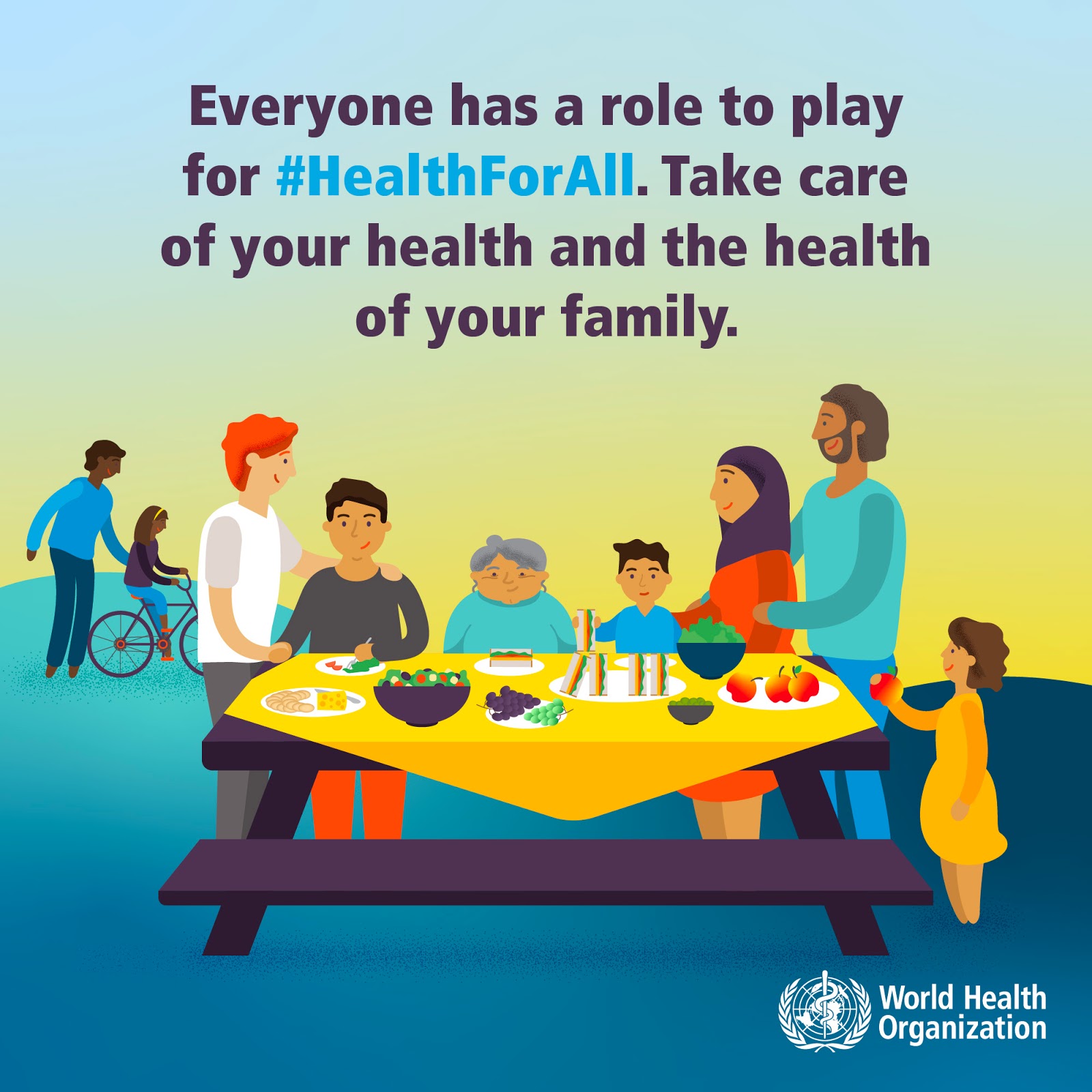
The tagline for World Health Day is: Health for all – everyone, everywhere.

Why universal health coverage and primary health care?

Universal health coverage means that all people have access to the quality health services they need, when and where they need them, without financial hardship. We believe this is possible and it starts with strong primary health care. Primary health care is a whole-of-society approach to health and well-being centered on the needs and preferences of individuals, families and communities.


To make health for all a reality, governments need to invest in quality, accessible primary health care. Health workers need to care and advocate for patients and educate them on how to get and stay healthy. Individuals and communities need to be empowered to take care of their own health.


Health is a human right. Together, we can make health for all a reality.  

                                            ~~~
Trinity Care Foundation is a Public Health Organization, has the Trust registration, PAN, TAN, 12A, 80G, Professional tax and FCRA. It is registered with NITI Ayog, Government of India. It is National Health Mission Partner in Karnataka, India.

Connect with Us:
Email: support@trinitycarefoundation.org | tel: +91 988039 6666 | +91 988035 8888 |

Website : www.trinitycarefoundation.com
Impact : www.flickr.com/photos/trinitycarefoundation/albums


Sunday, March 24, 2019

Key messages to protect heart health

Cardiovascular diseases (CVDs) are disorders of the heart and blood vessels and include coronary heart disease, cerebrovascular disease, rheumatic heart disease and other conditions. Four out of five CVD deaths are due to heart attacks and strokes. Individuals at risk of CVD may demonstrate raised blood pressure, glucose, and lipids as well as overweight and obesity. These can all be easily measured in primary care facilities. Identifying those at highest risk of CVDs and ensuring they receive appropriate treatment can prevent premature deaths. Access to essential NCD medicines and basic health technologies in all primary health care facilities is essential to ensure that those in need receive treatment and counselling.


WHO estimates that more than 17.5 million people died of cardiovascular diseases such as heart attack or stroke in 2012. Contrary to popular belief, more than 3 out of 4 of these deaths occurred in low- and middle-income countries, and men and women were equally affected.

The good news, however, is that 80% of premature heart attacks and strokes are preventable. Healthy diet, regular physical activity, and not using tobacco products are the keys to prevention. Checking and controlling risk factors for heart disease and stroke such as high blood pressure, high cholesterol and high blood sugar or diabetes is also very important.


  • Eat a healthy diet: A balanced diet is crucial to a healthy heart and circulation system. This should include plenty of fruit and vegetables, whole grains, lean meat, fish and pulses with restricted salt, sugar and fat intake. Alcohol should also be used in moderation.
  • Take regular physical activity: At least 30 minutes of regular physical activity every day helps to maintain cardiovascular fitness; at least 60 minutes on most days of the week helps to maintain healthy weight.
  • Avoid tobacco use: Tobacco in every form is very harmful to health - cigarettes, cigars, pipes, or chew-able tobacco. Exposure to second-hand tobacco smoke is also dangerous. The risk of heart attack and stroke starts to drop immediately after a person stops using tobacco products, and can drop by as much as half after 1 year.

Check and control your overall cardiovascular risk: An important aspect of preventing heart attacks and strokes is by providing treatment and counselling to individuals at high risk (those with a 10 year cardiovascular risk equal to or above 30%) and reducing their cardiovascular risk. A health worker can estimate your cardiovascular risk using simple risk charts and provide the appropriate advice for managing your risk factors.


  1. Know your blood pressure: High blood pressure usually has no symptoms, but is one of the biggest causes of sudden stroke or heart attack. Have your blood pressure checked and know your numbers. If it is high, you will need to change your lifestyle to incorporate a healthy diet with less salt intake and increase physical activity, and may need medications to control your blood pressure.
  2. Know your blood lipids: Raised blood cholesterol and abnormal blood lipids increase the risk of heart attacks and strokes. Blood cholesterol needs to be controlled through a healthy diet and, if necessary, by appropriate medications.
  3. Know your blood sugar: Raised blood glucose (diabetes) increases the risk of heart attacks and strokes. If you have diabetes it is very important to control your blood pressure and blood sugar to minimize the risk.

Trinity Care Foundation is a Non-Profit Organization, has the Trust registration, PAN, TAN, 12A, 80G, Professional tax and FCRA. It is registered with NITI Ayog, Government of India. It is National Health Mission Partner in Karnataka, India.

Contact Us : | tel: +91 988039 6666 | +91 988035 8888  |

Website : www.trinitycarefoundation.com
Instagram : www.instagram.com/trinitycarefoundation
Impact : www.flickr.com/photos/trinitycarefoundation/albums
Twitter : https://twitter.com/tcfindia

Monday, May 28, 2018

World No Tobacco Day 2018


World No Tobacco Day 2018 : Tobacco and heart disease

Every year, on 31 May, WHO and partners mark World No Tobacco Day (WNTD), highlighting the health and other risks associated with tobacco use, and advocating for effective policies to reduce tobacco consumption.

The focus of World No Tobacco Day 2018 is "Tobacco and heart disease." The campaign will increase awareness on the:

  • link between tobacco and heart and other cardiovascular diseases (CVD), including stroke, which combined are the world’s leading causes of death;
  • feasible actions and measures that key audiences, including governments and the public, can take to reduce the risks to heart health posed by tobacco.

World No Tobacco Day 2018 coincides with a range of global initiatives and opportunities aimed at addressing the tobacco epidemic and its impact of public health, particularly in causing the death and suffering of millions of people globally. These actions include the WHO-supported Global Hearts and RESOLVE initiatives, which aim to reduce cardiovascular disease deaths and improve care, and the third United Nations General Assembly High-level Meeting on the Prevention and Control of NCDs , being held in 2018.

How tobacco endangers the heart health of people worldwide

World No Tobacco Day 2018 will focus on the impact tobacco has on the cardiovascular health of people worldwide.

Tobacco use is an important risk factor for the development of coronary heart disease, stroke, and peripheral vascular disease.

Despite the known harms of tobacco to heart health, and the availability of solutions to reduce related death and disease, knowledge among large sections of the public that tobacco is one of the leading causes of CVD is low.

Facts about tobacco, heart and other cardiovascular diseases

Cardiovascular diseases (CVD) kill more people than any other cause of death worldwide, and tobacco use and second-hand smoke exposure contribute to approximately 12% of all heart disease deaths. Tobacco use is the second leading cause of CVD, after high blood pressure.

The global tobacco epidemic kills more than 7 million people each year, of which close to 900 000 are non-smokers dying from breathing second-hand smoke. Nearly 80% of the more than 1 billion smokers worldwide live in low- and middle-income countries, where the burden of tobacco-related illness and death is heaviest.

The WHO MPOWER measures are in line with the WHO Framework Convention on Tobacco Control (WHO FCTC) and can be used by governments to reduce tobacco use and protect people from NCDs. These measures include:

  • Monitor tobacco use and prevention policies;
  • Protect people from exposure to tobacco smoke by creating completely smoke-free indoor public places, workplaces and public transport;
  • Offer help to quit tobacco (cost-covered, population-wide support, including brief advice by health care providers and national toll-free quit lines);
  • Warn about the dangers of tobacco by implementing plain/standardized packaging, and/or large graphic health warnings on all tobacco packages, and implementing effective anti-tobacco mass media campaigns that inform the public about the harms tobacco use and second-hand smoke exposure.
  • Enforce comprehensive bans on tobacco advertising, promotion and sponsorship; and
  • Raise taxes on tobacco products and make them less affordable. 


Goals of the World No Tobacco Day 2018 campaign

World No Tobacco Day 2018 aims to:

  • Highlight the links between the use of tobacco products and heart and other cardiovascular diseases.
  • Increase awareness within the broader public of the impact tobacco use and exposure to second-hand smoke have on cardiovascular health.
  • Provide opportunities for the public, governments and others to make commitments to promote heart health by protecting people from use of tobacco products.
  • Encourage countries to strengthen implementation of the proven MPOWER tobacco control measures contained in the WHO FCTC.

Related

Thursday, April 6, 2017

World Health Day 2017 - Depression: Let's talk !!!

The World Health Day this year focuses on ‘depression’. 

Worried about the future? Preventing depression during your teens and twenties..


Adolescence and young adulthood present many opportunities – for meeting new people, visiting new places and finding a direction in life. These years can also be a time of stress. If you are feeling overwhelmed rather than excited by these challenges, read on..


What you should know.

  • Depression is an illness characterized by persistent sadness and a loss of interest in activities that you normally enjoy, accompanied by an inability to carry out daily activities, for at least two weeks.
  • In addition, people with depression normally have several of the following: a loss of energy; a change in appetite; sleeping more or less; anxiety; reduced concentration; indecisiveness; restlessness; feelings of worthlessness, guilt, or hopelessness; and thoughts of self-harm or suicide.
  • Much can be done to prevent and treat depression.

What you can do if you are feeling down, or think you may be depressed

  • Talk to someone you trust about your feelings.
  • Seek professional help. Your local health-care worker or doctor is a good place to start.
  • Stay connected. Keep in contact with family and friends.
  • Exercise regularly, even if it’s just a short walk.
  • Stick to regular eating and sleeping habits.
  • Avoid or restrict alcohol intake and refrain from using illicit drugs; they can worsen depression.
  • Continue doing things you have always enjoyed, even when you don’t feel like it.
  • Be aware of persistent negative thoughts and self-criticism and try to replace them with positive thoughts. Congratulate yourself on your achievements.
Remember: There is a lot that you can do to keep mentally strong. If you feel that you may be heading for depression, talk to someone you trust or seek professional help.


Thursday, November 14, 2013

World Pneumonia Day


Every year on 12 November, World Pneumonia Day is celebrated across the globe to raise awareness about pneumonia; promote interventions to protect against, prevent and treat pneumonia; and generate action to combat pneumonia. 


Help us raise awareness by sharing these facts!

  1. Pneumonia is the #1 killer of children under age 5 worldwide. 
  2. 99% of all childhood deaths from pneumonia occur in the developing world.
  3. Pneumonia is solvable - Pneumonia is one of the most solvable problems in global health. We have the safe, effective and affordable tools necessary to help prevent children from contracting pneumonia and to treat those suffering with this illness. See how! 
  4. We can win the fight - To advance progress, we must continue to scale up interventions that we know will save children's lives, including continued access to vaccines, proper antibiotic treatment, improved sanitation, as well as the promotion of practices such as breastfeeding  frequent hand washing, care seeking, and the use of clean cook-stoves to reduce indoor air pollution. See the info-graphic! 
  5. Make pneumonia a priority: Join the Coalition Together we can ensure that everyone works together to make pneumonia a priority. Join the Global Coalition against Child Pneumonia.  
World Pneumonia Day { 12-Nov-2013 } - http://lnkd.in/bmt5nFA  & http://worldpneumoniaday.org/ 

Saturday, May 11, 2013

Controlling the Tobacco Epidemic among Women...


This fact file focuses on the harm that tobacco marketing and smoke do to women.

About 200 million of the world's one billion smokers are women. The tobacco industry aggressively targets women in order to increase its consumer base and to replace those consumers who quit or who die prematurely from cancer, heart attack, stroke, emphysema or other tobacco-related disease.
Girls and boys start using tobacco for different reasons, and tobacco use harms women and men differently.
Approximately 1.5 million women die every year from tobacco use. Understanding and controlling the tobacco epidemic among women is an important part of any tobacco control strategy.

Smoke Free


  1. More women than men smoke "light" cigarettes: Marketing strategies lure consumers with misleading categories, such as "light" or "low tar". More women than men smoke "light" cigarettes (63% versus 46%), often in the mistaken belief that "light" means "safer". In fact, "light" smokers often engage in compensatory smoking, inhaling more deeply and more frequently to absorb the desired amount of nicotine. 
  2. Tobacco use harms women differently from men: Women who smoke are more likely than those who do not to experience infertility and delays in conceiving. Smoking during pregnancy increases risks of premature delivery, stillbirth and newborn death, and may cause a reduction in breast milk. Smoking increases women's risk for cancer of the cervix. 
  3. Women constitute 64% of deaths from second-hand smoke: Worldwide, second-hand smoke causes 430 000 adult deaths per year. Sixty-four per cent of these deaths occur in women. In some countries, second-hand smoke is a greater threat to women than the possibility that women might start using tobacco. More than 90% of the world's population is still not covered by comprehensive national smoke-free laws. 
  4. People who smoke should avoid exposing the people with whom they live and work to second-hand smoke: Women and children often lack power to negotiate smoke-free spaces, including in their homes, in their workplaces and in other public spaces. Everyone, regardless of age or sex, should be protected from secondhand smoke. 
  5. Controlling tobacco use among women is an important part of any tobacco control strategy: Tobacco prevention and cessation programmes should be integrated into maternal, child and reproductive health services. Warnings about the harmful effects of tobacco must take into account that illiteracy is higher among women than men, and should use clear pictures to ensure that those who cannot read are also able to understand the health risks of tobacco use.

Related Links :
World Health Organization - Department of Gender, Women and Health 
World No Tobacco Day 2013  

Trinity Care Foundation is a Non Governmental Organization focusing on Craniofacial SurgeriesSchool Health and Outreach Health Programs in Karnataka, India.
                   : Flickr Facebook : Pinterest : YouTube : Wordpress :